Available 24/7 with Emergency Response
Water Mitigation & Structural Drying in North Texas
Your adjuster said "get mitigation started immediately." Here's what that actually means -- and why the first 48 hours decide how far your claim has to stretch. Warrior Restoration LLC performs emergency water extraction, controlled demolition, and structural drying to IICRC S500 standards across Collin and Grayson County, with documentation your adjuster can act on immediately. IICRC WRT and ASD certified. $2 million insured.
What Your Adjuster Means
Mitigation Is the Emergency Half
Mitigation is everything that stops a water loss from getting bigger: pulling standing water out, cutting away materials that can't be saved, drying what's left to a certified standard, and documenting the whole thing as it happens. It's the phase your adjuster means when they say "get mitigation started" -- and it's a race against the clock.
The first 48 hours matter because moisture doesn't sit still. It wicks up drywall, travels through framing, and can start growing mold before anyone notices a smell. The faster mitigation starts, the smaller the scope of everything that follows -- which is also the biggest lever on how far your claim has to stretch.
Call (903) 993-5663Restoration Is the Rebuild That Follows
Once the structure reads dry, restoration is the phase that puts the room back together -- the part most people picture when they think "repair."
- Drywall and insulation replacement where materials couldn't be saved
- Flooring, trim, and baseboard reconstruction
- Paint and finish work back to pre-loss condition
- Final walkthrough once the room is move-in ready
Warrior Restoration runs both phases with the same crew, so nothing gets lost in a hand-off between the emergency company and the contractor. See our full water damage restoration process →
The Mitigation Scope
What "Mitigation" Actually Covers
Every step follows IICRC S500 water damage restoration guidelines. Our technicians hold IICRC WRT (Water Restoration Technician) and ASD (Applied Structural Drying) certifications -- the credentials the standard is built around.
Emergency Water Extraction
Portable extraction units pull standing water from floors, carpet, and pad first -- the single step that limits how far the loss spreads while everything else is still being assessed.
Controlled Demolition
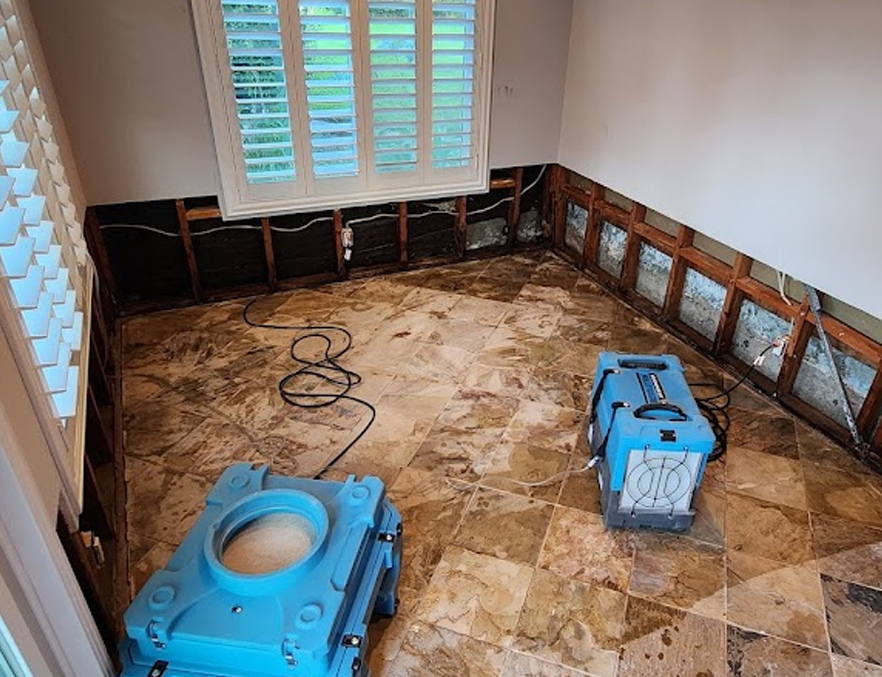
Flood cuts remove only the drywall and materials too saturated to dry in place -- typically 12 to 18 inches above the waterline -- so demolition stays proportional to the loss, not blanket teardown.
Structural Drying
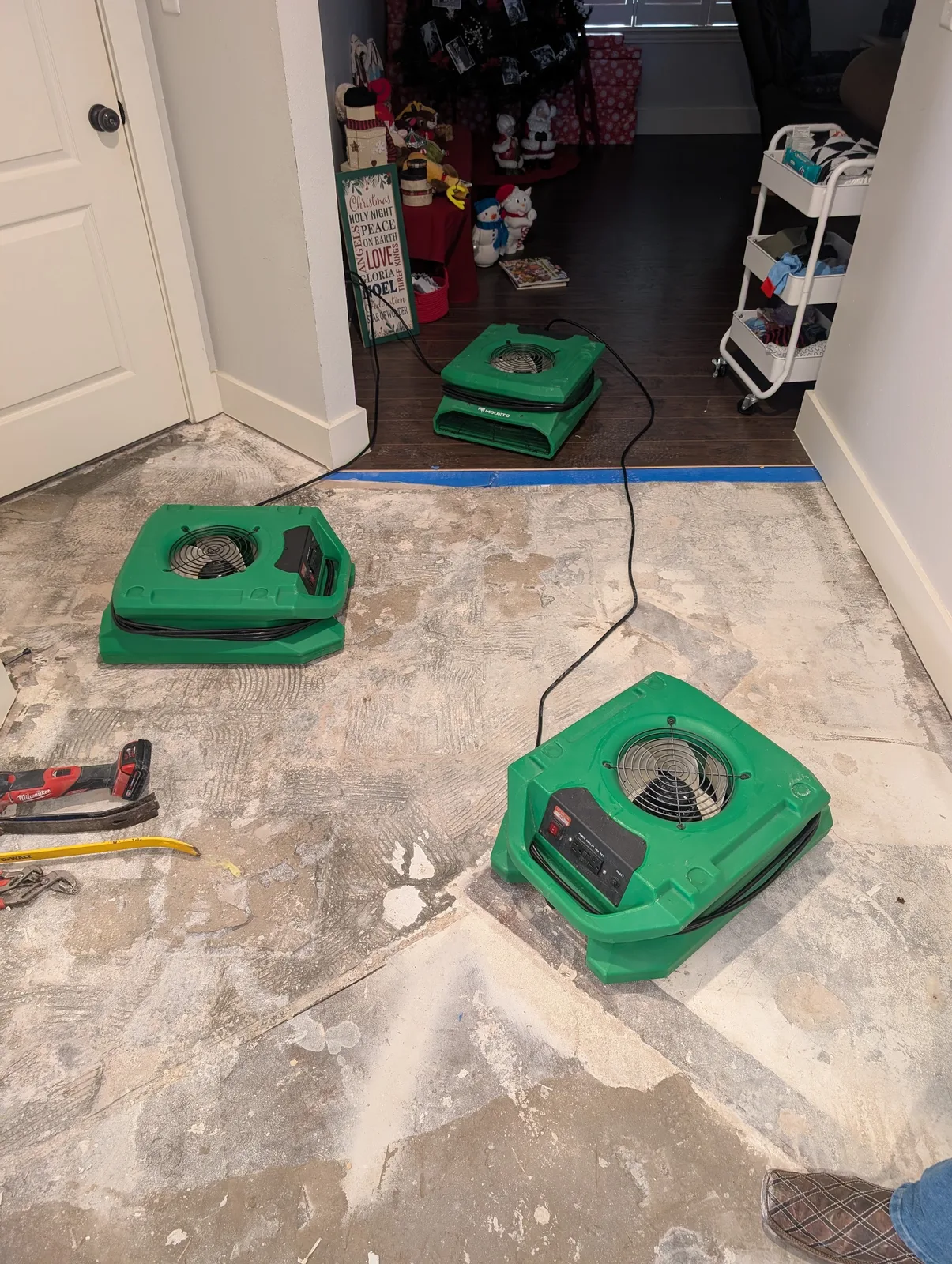
High-velocity air movers pull moisture off wet surfaces while LGR dehumidifiers pull it out of the air, working toward a specific drying goal for each material -- not a guess at when it feels dry.
Daily Moisture Monitoring
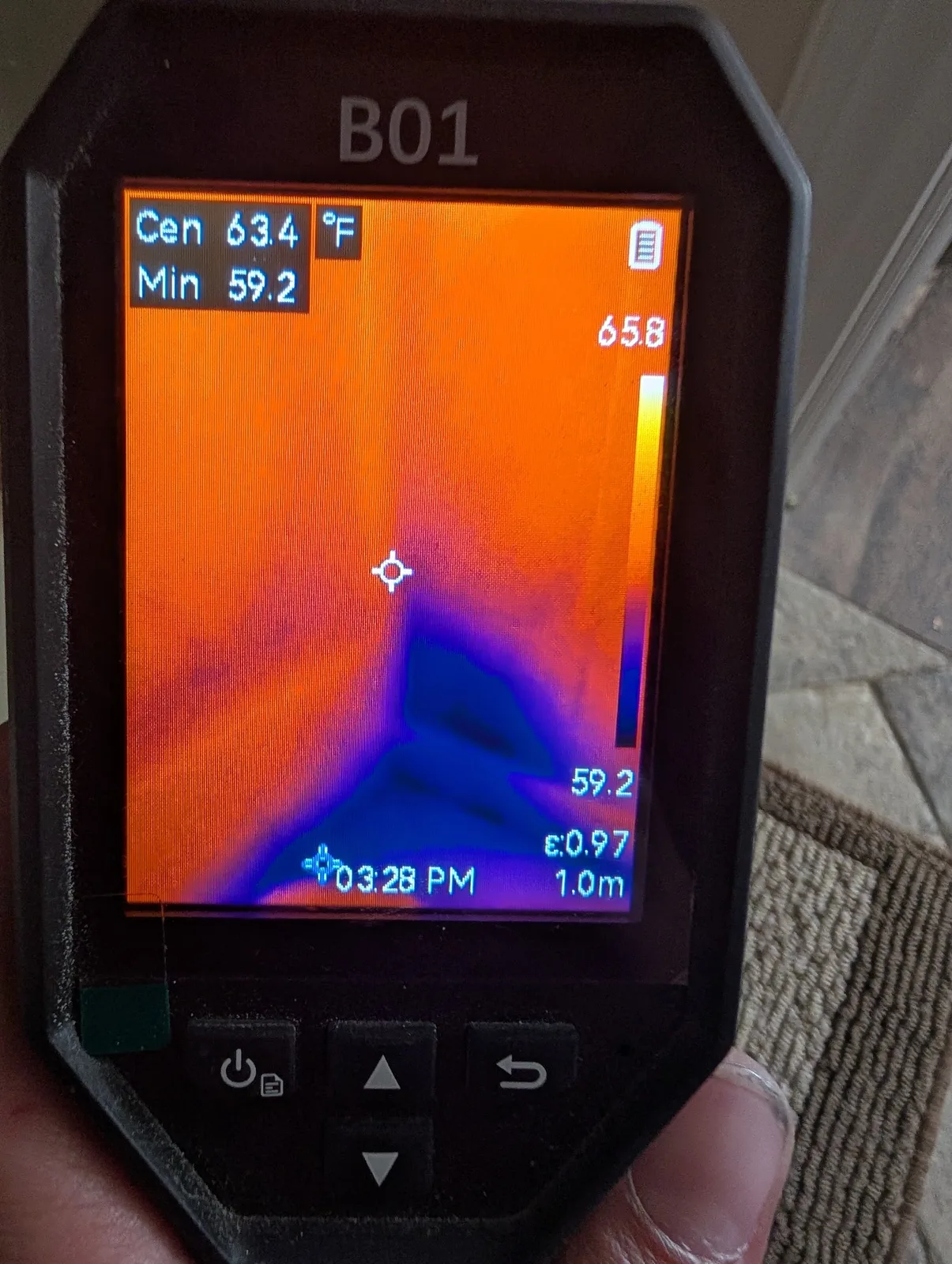
Calibrated moisture meters and thermal imaging track every affected surface daily until it hits certified dry standards, with readings logged at each visit.
Documentation That Carries Your Claim
If It Isn't Documented, Your Adjuster Can't Approve It
Homeowners want proof the work actually happened. Adjusters and property managers need a paper trail that stands up to review. The same four records serve both:
- Moisture maps. A room-by-room record of every reading, taken at the first visit and tracked daily, showing exactly how far water traveled.
- Daily drying logs. Equipment readings and moisture-content data logged on every visit, not just at the start and end of the job.
- Photo record. Time-stamped photos of the loss, the demolition, and the drying setup, so nothing has to be taken on faith after the fact.
- Equipment placement records. What ran where, and for how long -- the detail carriers ask for when they review a mitigation invoice line by line.
How Drying Actually Works
Why Dehumidification Is the Heart of Drying
Air movers get the attention because you can see and hear them working, but they don't remove water -- they move it. A fan blowing across a wet wall speeds up evaporation, pulling moisture off the surface and into the air around it. If that air has nowhere to go, the moisture just re-settles somewhere else in the room: back into drywall, framing, or flooring that was never wet to begin with. Fans without dehumidification don't dry a structure. They redistribute the problem.
Dehumidification is the step that actually takes water out of the room. An LGR (low grain refrigerant) dehumidifier pulls moisture out of the air and collects it, lowering what's called the grain count -- the amount of water held in each pound of air. The lower the grain count, the more moisture wet materials can keep releasing into the air without it going back into the walls. Air movers create the airflow; the dehumidifier is what removes the water for good. Run a job with fans and no dehumidification and drying stalls -- or worse, spreads.
For Adjusters & Property Managers
Vetting a Mitigation Vendor
If you're scoping a vendor for a claim or a portfolio of properties, here's what you're working with:
- Response window. On site within 1 hour, 24 hours a day, 7 days a week, anywhere in Collin or Grayson County.
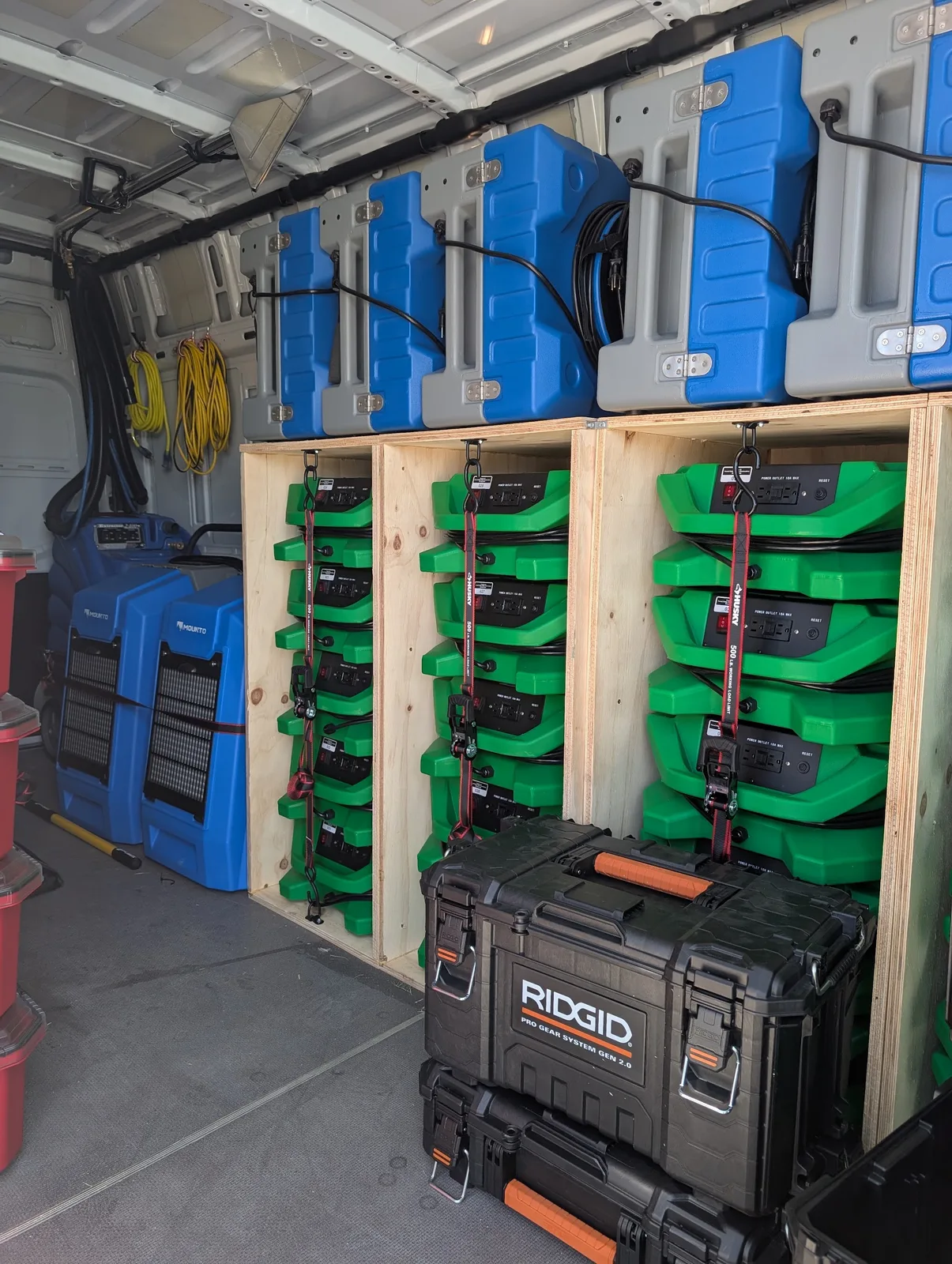
- Crew and equipment capacity. A crew of 6 running 3 response trucks, each racked with extraction units, air movers, and LGR dehumidifiers ready to deploy on arrival.
- One point of contact. Owner-operated -- Justin Miller is personally accountable on jobs, not a call center dispatching a rotating list of subcontractors.
Related Services
Where This Fits in Your Restoration
Mitigation is one phase of a larger project -- and the best defense against the damage it's meant to prevent.
Water Damage Restoration
The full-service path: emergency mitigation through structural drying, repairs, and reconstruction, handled by one crew from the first hour to move-in ready.
Learn MoreMold Remediation
What thorough mitigation is meant to prevent. If moisture went undetected long enough for growth to start, our AMRT-certified crew contains and remediates it.
Learn MoreService Area
Water Mitigation Across North Texas
Warrior Restoration responds to water emergencies within a 40-mile radius of Anna, TX -- covering Collin County, Grayson County, and the North Dallas suburbs.
- Anna
- Melissa
- Celina
- Sherman
- Princeton
- Murphy
- Prosper
- Rockwall
- Rowlett
- Garland
- McKinney
- Allen
- Frisco
- Denton
- Plano
- Lewisville
- Richardson
- Carrollton
STILL GOT QUESTIONS?
Frequently Asked Questions
Common questions about water mitigation and structural drying. Call (903) 993-5663 any time for a direct answer from our crew.
24/7 Emergency Response
Get Water Mitigation Started Today Across North Texas