Available 24/7 with Emergency Response
Fire Damage Restoration in North Texas
The fire department's job ends when the flames are out. That's when a homeowner is left standing in the smell of it -- soot on every surface, smoke in the air ducts, water from the hose lines soaking into the subfloor. Warrior Restoration LLC is the second responder. We show up within 1 hour, secure the structure, and run an IICRC FSRT-certified process from the first walk-through to the last trace of odor -- soot removal, smoke odor removal, structural drying, content pack-out, and reconstruction, all handled by the same crew.
What Fire Leaves Behind
Three Kinds of Damage, One Fire
A house fire almost never leaves just one type of damage. Every loss we respond to in North Texas involves some combination of these three, and each one keeps working on the structure after the flames are out.
Burn and Char
The threat: structural framing, drywall, and finishes are directly consumed or weakened by flame, and the extent isn't always visible from the surface. The resolution: we assess structural integrity room by room, including thermal imaging where char may hide behind an intact wall, before any demolition begins.
Acidic Soot
The threat: soot is acidic and starts etching metal, glass, and painted surfaces within 24 to 72 hours -- and it travels through HVAC systems into rooms the fire never touched. The resolution: dry chemical sponges and HEPA vacuums lift soot by surface type before it becomes permanent.
Suppression Water
The threat: the water used to put the fire out soaks into subfloors, framing, and insulation, and left alone it becomes a mold problem inside of days. The resolution: industrial dehumidifiers and high-velocity air movers dry structural materials to certified standards.
Smoke Damage Cleanup
Soot Doesn't Come Off the Way You'd Expect
Soot behaves differently depending on what it lands on, and treating every surface the same way is the most common mistake homeowners make before we arrive.
Hard surfaces -- tile, glass, painted trim -- can usually be cleaned with the right dry-sponge technique, but soot left too long starts to etch the finish permanently. Fabric and upholstery hold soot particles deep in the fibers; standard vacuuming pushes residue further in rather than lifting it out. Wood and drywall are porous enough that soot and odor bond into the material itself, not just the surface. Wiping any of these with an all-purpose cleaner and water is the single most common way homeowners make soot damage worse -- water turns dry soot into a smear that grinds acidic residue into the surface instead of removing it.
HVAC contamination is the part most homeowners miss entirely. Within minutes of a fire, smoke particles are pulled into the return air and distributed through every duct in the house -- which is why rooms far from the fire can still smell like smoke and show a fine soot film on surfaces. We clean the ductwork and HVAC system as a standard part of every fire job; we don't replace it, we clean it, because that's what the contamination actually calls for.
Smoke Odor Removal
Why the Smell Comes Back After You've Already Cleaned
Smoke odor is stubborn because the particles that carry it are microscopic enough to work their way into porous materials and wall cavities -- drywall, insulation, subflooring, the inside of cabinetry. A surface wipe-down cleans what you can see and reach, then the odor "returns" over the following days as residue trapped deeper in the material continues to off-gas.
That's why smoke odor removal isn't a single step. It's a sequence: remove what can't be salvaged, clean everything that can be, then seal the surfaces so trapped residue can't keep releasing odor into the room. Skipping any one of the three steps is the most common reason a "cleaned" house still smells like smoke weeks later.
Call (903) 993-5663Our Three-Step Process
- Source removal -- charred, saturated, or unsalvageable material is removed so it can't keep contaminating the air.
- Deep cleaning -- HEPA air scrubbers and thermal foggers work smoke particles out of everything that can be restored, including HVAC ductwork.
- Sealing -- treated surfaces are sealed so residual odor trapped in the material can't off-gas back into the room.
We'll give you a straight read on how far the odor has traveled during the on-site estimate -- a small, contained fire is a different job than smoke that worked through the whole HVAC system for hours.
Contents and Pack-Out Care
Protecting What Survived the Fire
Not everything in a fire-damaged home is a total loss, but figuring out what can be saved takes more than a glance. Furniture, electronics, textiles, and personal belongings each hold soot and odor differently, and cleaning the wrong item the wrong way can finish the job the fire started.
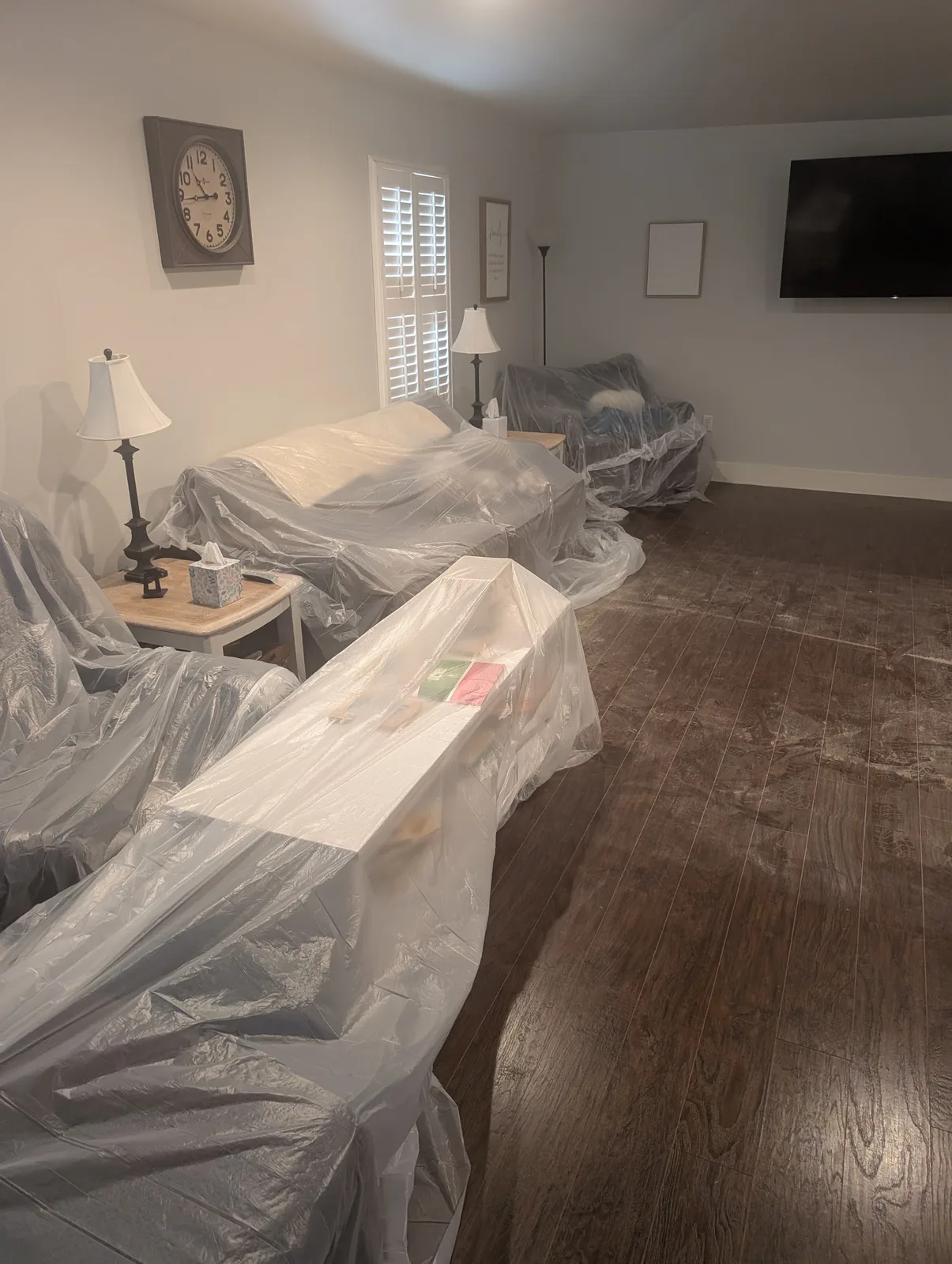
We start with a full content inventory, wrap and protect items in place with poly sheeting to stop further contamination while work continues around them, and separate what can be cleaned on site from what needs off-site treatment. Items that genuinely can't be restored are documented as a loss -- itemized, photographed, and added to your claim record -- rather than guessed at.
Suppression Water
Every Fire Loss Is Also a Water Loss
The water used to put the fire out doesn't go away on its own. It soaks into subfloors, wicks up drywall, and pools in places you can't see without a moisture meter -- and left alone, it turns a fire claim into a mold claim within days. We treat suppression water as part of every fire job, running the same structural drying process we use for water damage restoration across North Texas: extraction, industrial dehumidifiers, and high-velocity air movers, dried to certified standards before any reconstruction starts.
If drying gets delayed -- insurance approval takes time, or a room goes unnoticed during the initial walk-through -- that trapped moisture is exactly the condition mold needs to take hold. If you're seeing musty odor or visible growth on top of fire damage, our mold remediation process picks up from there. Two problems, one crew, no separate contractor to coordinate.
Insurance Documentation
A Damage Record Built to Support Your Claim
An adjuster can only approve what's documented. We build a record of your loss as we work, so nothing gets left out of the claim:
- Room-by-room photo documentation of burn, soot, and water damage before any cleanup begins.
- Itemized content inventory covering what's salvageable, what needs off-site treatment, and what's a documented loss.
- Moisture and thermal imaging readings establishing the drying baseline for suppression water.
- A written scope of damage you can hand directly to your adjuster, including rooms the fire never touched but smoke did.
Free On-Site Estimates
We inspect at no charge and document the full scope of damage before any work begins.
Call (903) 993-5663Where We Work
Fire Damage Restoration Across North Texas
Warrior Restoration LLC responds to fire and smoke damage within about a 40-mile radius of Anna, TX, covering Collin County, Grayson County, and the North Dallas suburbs. Fire and smoke are one part of what we handle -- visit our full range of restoration services to see how we cover water, mold, and storm damage across the same area.
STILL GOT QUESTIONS?
Frequently Asked Questions
Common questions about fire and smoke damage restoration in North Texas. Call (903) 993-5663 any time for a direct answer from our crew.
24/7 Emergency Response
Get Expert Fire Damage Restoration in North Texas