Available 24/7 with Emergency Response
HVAC & Air-Duct Mold Remediation in North Texas
A musty smell that only shows up when the AC kicks on. Dark spots inside a return grille that keep coming back. That's mold growing inside the system itself -- on the evaporator coil, in the drain pan, along the ductwork -- fed by condensation the system was never draining properly. Warrior Restoration LLC contains it, removes it under HEPA-filtered air, and identifies the moisture source so you know exactly what to hand your HVAC contractor -- IICRC AMRT certified, $2 million insured.
The Part Nobody Explains
Your HVAC System Is a Moisture Machine. That's the Whole Problem.
Air conditioning works by pulling humidity out of the air across a cold evaporator coil -- that water is supposed to collect in a drain pan and leave through a condensate line. When that line clogs with algae and dust, or the pan corrodes and overflows, or a system that's oversized for the space short-cycles without ever running long enough to fully dry the coil, the moisture doesn't leave. It sits inside a dark, enclosed metal box with airflow running through it -- which is close to ideal growing conditions for mold.
That's the black box behind the musty smell that only shows up when the AC kicks on: air is moving across damp, growth-affected components and carrying the smell into the room, then it fades once the system cycles off. Our crew holds IICRC WRT and ASD certification for structural drying alongside AMRT for microbial remediation, so we're reading the moisture pattern -- not just the visible growth -- from the first inspection.
How We Work
How HVAC & Air-Duct Mold Remediation Works
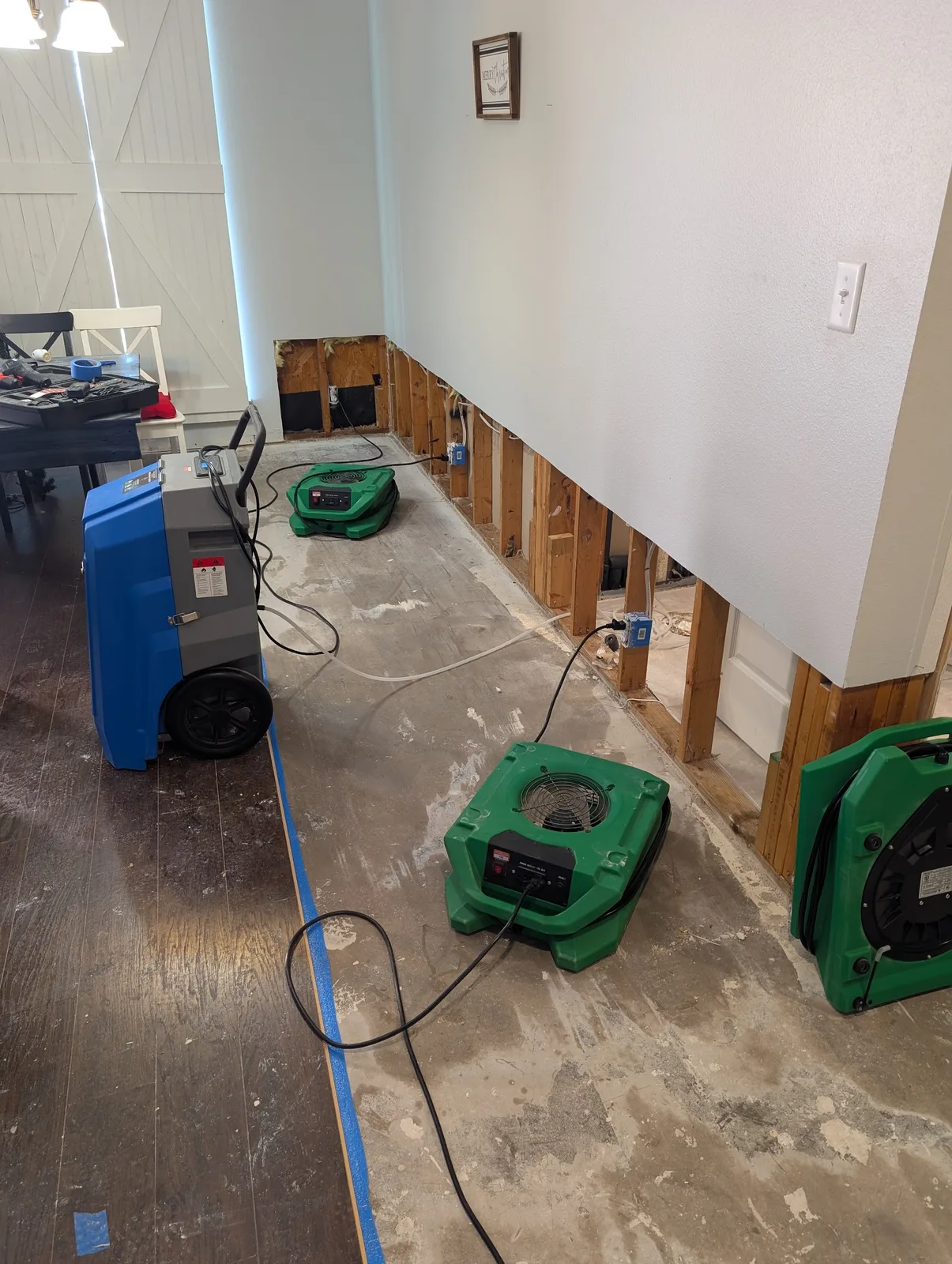
Our IICRC AMRT-certified crew runs a sequence built around one fact: the mold and the mechanical system are two separate problems, and we only own one of them.
Contain & Shut Down the System
The affected system is shut down so it isn't actively circulating spores through the home, and the work area around accessible components is sealed before anything is disturbed.
HEPA-Clean Affected Components
Accessible parts of the air handler, drain pan, and affected duct sections are HEPA-vacuumed and cleaned under negative air by a crew in full PPE.
Antimicrobial Treatment
Cleaned surfaces are treated with EPA-registered antimicrobial to address growth too small to see, reducing what's left to grow back.
Identify the Moisture Source
We pinpoint what's feeding it -- coil condensation, a clogged drain pan or line, sweating ductwork -- and hand that finding to your HVAC contractor for the mechanical fix.
Straight Talk
Why "Just Clean the Ducts" Doesn't Fix HVAC Mold
A lot of homeowners call a duct-cleaning outfit first, get the visible dust and growth wiped out, and see it come back within a season. That's not a bad cleaning job -- it's an untreated cause. If the coil is still sweating, the drain pan is still overflowing, or the system is still short-cycling, the moisture that grew the mold in the first place never left. Cleaning the symptom without touching the cause is paying for the same job twice.
We're straightforward about where our lane ends. Warrior remediates the microbial growth -- containment, removal, antimicrobial treatment of the affected components and ductwork -- and we identify the mechanical issue behind it in plain language you can hand to your HVAC contractor. We do not repair, service, or replace HVAC systems, coils, or ductwork ourselves, and we're not chasing that work. Two different trades, two different jobs, one honest handoff between them.
Texas Mold Rules, Plain English
Why We Don't Test Our Own Work
Texas separates mold assessment from mold remediation on purpose. For larger jobs, an independent, licensed assessor inspects the property, writes the remediation protocol, and later performs the clearance testing that confirms the work is done. Warrior Restoration is not that assessor -- we do not hold a TDLR mold assessor license, and we never offer mold inspection or mold testing as one of our services.
That separation is not a limitation, it is the point: the company that removes the mold should not be the same one grading its own cleanup. When your job calls for a licensed assessment, we work alongside that independent assessor rather than around them.
For a small, contained area -- under 25 contiguous square feet -- Texas rules do not require that licensed assessment process at all, so homeowners can bring a remediation crew in directly. Either way, our lane stays the same: containment, removal, cleaning, antimicrobial treatment, and identifying the moisture source -- not the mechanical HVAC repair itself.
Call (903) 993-5663Warrior's Lane: Remediation, Not Mechanical Repair
- Containment and shutdown of the affected system before anything is disturbed
- HEPA-filtered cleaning of accessible air handler, drain pan, and duct components
- EPA-registered antimicrobial treatment of affected surfaces
- Identifying the moisture source -- coil condensation, clogged drain, sweating duct
- Handing that finding to your HVAC contractor for the mechanical fix
- We do not repair, service, or replace HVAC units, coils, or ductwork
One Crew, Every Angle
HVAC Mold Is One Piece of a Bigger Mold Picture
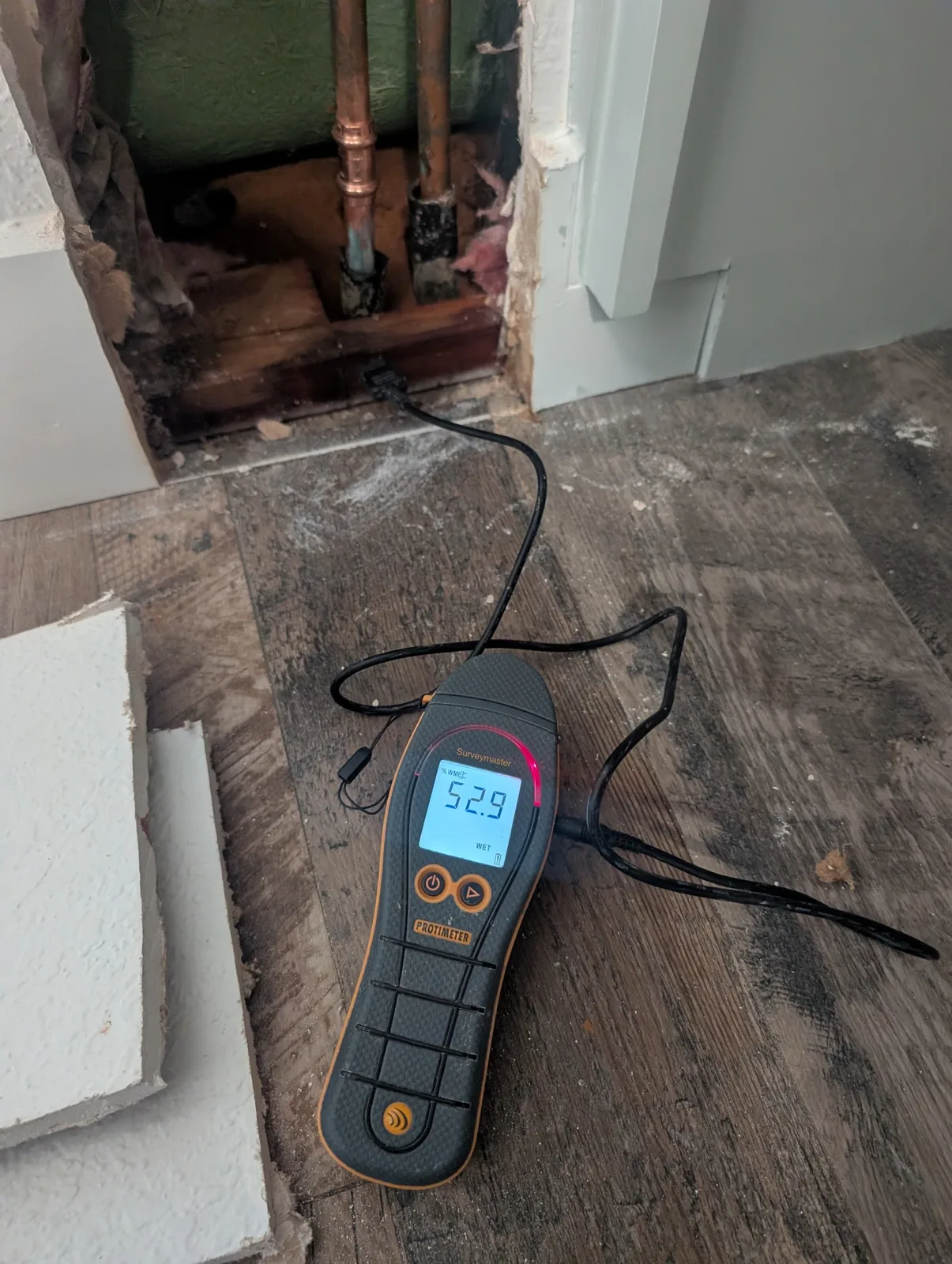
HVAC condensation is one common moisture source behind mold growth -- a leak, a slow roof intrusion, or a water event that wasn't fully dried are just as common. If the growth has spread beyond the HVAC system itself, or you're not sure where it's coming from, our mold remediation hub covers the full remediation process -- what a job typically involves, how Texas mold rules work, and what it costs.
And if you're dealing with an active leak or flooding right now rather than a slow HVAC-driven problem, our water damage restoration team responds within 1 hour to extract water and start structural drying before mold has a chance to establish.
Where We Work
HVAC & Air-Duct Mold Remediation Across North Texas
Warrior Restoration serves a 40-mile radius centered on Anna, TX -- Collin County, Grayson County, and the North Dallas suburbs. See local mold remediation specifics for a nearby city below, or call now for any community in the service area.
- Anna, TX
- Melissa, TX
- Celina, TX
- Sherman, TX
- Princeton, TX
- Murphy, TX
- Prosper, TX
- Rockwall, TX
- Rowlett, TX
- Garland, TX
- McKinney, TX
- Allen, TX
- Frisco, TX
- Denton, TX
- Plano, TX
- Lewisville, TX
- Richardson, TX
- Carrollton, TX
Local mold remediation details for McKinney, Allen, and Frisco.
STILL GOT QUESTIONS?
Frequently Asked Questions
Common questions about HVAC and air-duct mold remediation in North Texas. Call (903) 993-5663 any time for a direct answer from our crew.
24/7 Emergency Response
Get Expert HVAC & Air-Duct Mold Remediation in North Texas